

 Global Hotline
In the field of electronic displays, glass cover panels are not only the basic protective layer of a screen, but also a core component that directly affects the visual performance, touch experience, and overall service life of a device. Whether used in smartphones, tablets, industrial control displays, or medical display equipment, the material of the glass cover directly determines the product’s user experience and durability level.
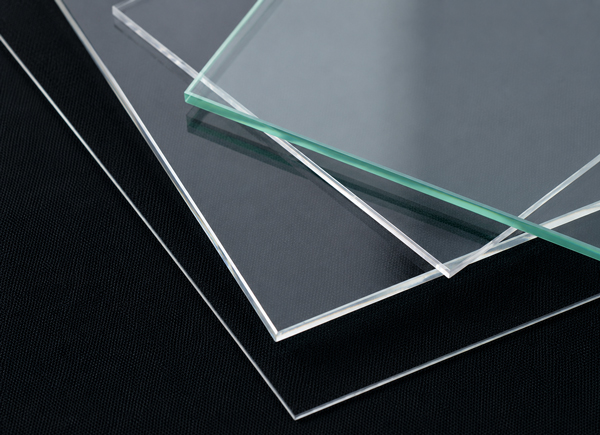
Green glass, ultra-clear glass, and high-aluminosilicate glass are the three most widely used glass materials in the electronic display industry. They differ significantly in composition, optical performance, mechanical strength, application scenarios, and production cost. This article focuses on electronic display applications and provides a comprehensive analysis of the key differences among these three types of glass, offering a reference for product design, material selection, and manufacturing processes.
1. Green Glass: Standard Soda-Lime Glass
Core keywords: low cost, greenish tint, easy processing
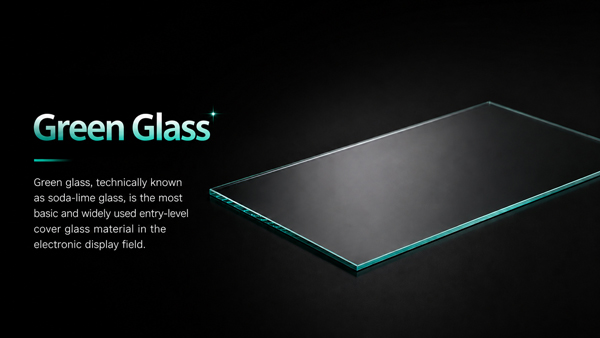
Green glass, technically known as soda-lime glass, is the most basic and widely used entry-level cover glass material in the electronic display field. Due to limitations in raw material purification, it contains a relatively high level of iron impurities. After light refraction, the glass shows an obvious light green tint, especially along the edges. Thanks to mature production and processing technologies, green glass is low-cost and highly processable, making it a mainstream material for general electronic display devices.
| Dimension | Detailed Description |
|---|---|
| Core composition | Soda-lime silicate glass: SiO₂ + Na₂O + CaO + MgO, with relatively high iron Fe impurities. |
| Light transmittance | Approximately 88%. |
| Mechanical strength | Low; very easy to break without strengthening treatment. |
| Wear resistance | Average, with a Mohs hardness of about 5–6; daily friction can easily cause scratches. |
| Key advantages | Extremely low cost; mature production and secondary processing technologies; can be cut, edge-ground, and tempered; suitable for various simple processing requirements. |
| Main drawbacks | The glass has a greenish tint, which affects screen color reproduction accuracy; insufficient mechanical strength and poor impact resistance; weak surface wear resistance, making it prone to scratches and aging. |
| Cost positioning | Low. |
One-sentence summary: It solves the basic problem of having a usable cover glass for electronic displays, but makes major compromises in visual performance and device durability.
2. Ultra-Clear Glass: Low-Iron Glass
Core keywords: transparent, colorless, color reproduction, high light transmittance
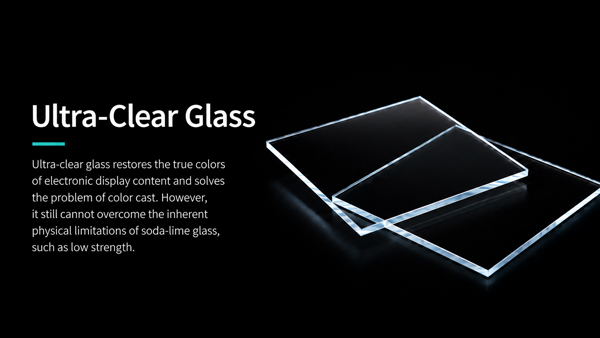
Ultra-clear glass, also known as low-iron glass, is a comprehensive upgrade of ordinary green soda-lime glass. Through refined raw material purification, iron impurities are strictly removed from the raw materials, eliminating the greenish color difference of standard green glass at the source. The result is a crystal-like, colorless, and highly transparent appearance. In the electronic display field, ultra-clear glass is a preferred material that balances cost-effectiveness and high-definition display quality, with a strong focus on accurate color reproduction.
| Dimension | Detailed Description |
|---|---|
| Core composition | Low-iron soda-lime silicate glass: SiO₂ + Na₂O + CaO + MgO, with iron Fe impurities below 150 ppm. |
| Light transmittance | Above 91%, with uniform light transmission and minimal loss. |
| Mechanical strength | Low; similar to green glass; also fragile and weak in impact resistance without strengthening treatment. |
| Wear resistance | Average, with a Mohs hardness of about 5–6; no significant advantage in wear resistance. |
| Key advantages | Completely colorless and transparent; no color cast interference; accurate and realistic screen color reproduction; much higher light transmittance than ordinary green glass; significantly improved visual quality. |
| Main drawbacks | Insufficient basic physical strength; poor drop and impact resistance; unsuitable for mobile devices with high drop risks unless thickened or supported by additional protective structures. |
| Cost positioning | Medium. |
One-sentence summary: It restores the true colors of electronic screen content and solves the problem of color cast, but it still cannot escape the fragile physical properties of soda-lime glass.
3. High-Aluminosilicate Glass
Core keywords: high strength, scratch resistance, high stability
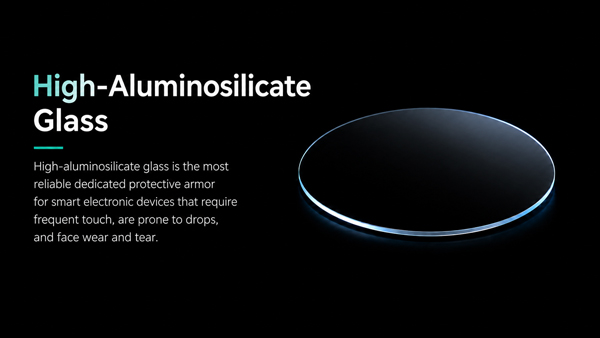
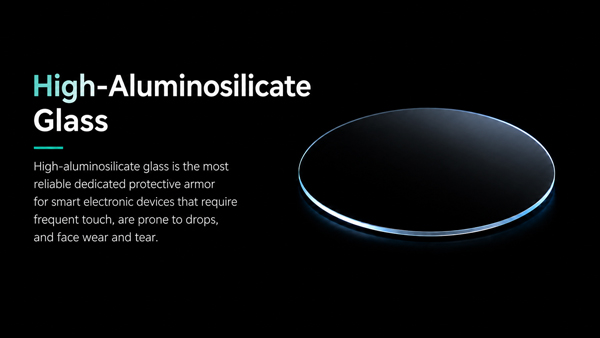
High-aluminosilicate glass is currently the mainstream high-end cover glass material for smartphones, smart wearables, automotive smart terminals, and other mobile electronic devices. By significantly increasing the aluminum oxide Al₂O₃ content, it reconstructs the internal molecular network of the glass, improving the material’s inherent strength from the source. Among the three types of glass discussed, it is also a high-performance specialty glass that is more suitable for deep chemical strengthening. It can adapt to complex usage scenarios involving frequent touch interaction, friction, and accidental drops.
| Dimension | Detailed Description |
|---|---|
| Core composition | High-aluminosilicate glass: SiO₂ + Al₂O₃ + Na₂O, with aluminum oxide Al₂O₃ content above 10%. |
| Light transmittance | Above 91%–92%, comparable to ultra-clear glass. |
| Mechanical strength | Extremely high; after chemical strengthening, bending strength can reach 500–800 MPa, which is 5–10 times that of green glass and ultra-clear glass; excellent bending and impact resistance. |
| Wear resistance | Excellent, with a Mohs hardness of about 6–7; resistant to daily friction from keys, sand, and small particles; less prone to scratches. |
| Key advantages | High strength, drop resistance, scratch resistance, and bending resistance. |
| Main drawbacks | Highest raw material and production cost; complex processing requirements; strict demands on equipment and technical capability; more difficult to mass-produce than ordinary soda-lime glass. |
| Cost positioning | High. |
One-sentence summary: It is a more reliable dedicated protective material for smart electronic devices that require frequent touch interaction and are exposed to drops, friction, and wear.
4. Ultimate Comparison: Clear Differences in Electronic Display Applications
| Feature | Green Glass | Ultra-Clear Glass | High-Aluminosilicate Glass |
|---|---|---|---|
| Core composition | Soda-lime silicate glass with high iron content. | Low-iron soda-lime silicate glass, with Fe below 150 ppm. | High-aluminosilicate glass, with Al₂O₃ above 10%. |
| Visual performance | Greenish edges; color cast affects display quality. | Completely colorless and transparent; accurate color reproduction without deviation. | Highly transparent; close to ultra-clear glass in optical quality; no obvious color difference. |
| Light transmittance | About 88%. | Above 91%. | 91%–92%. |
| Chemical strength | Low, with CS > 450 MPa and DOL > 8 μm. | Low, with CS > 450 MPa and DOL > 8 μm. | Extremely high; after chemical strengthening, strength can increase by 5–10 times, with CS > 650 MPa and DOL > 40 μm. |
| Wear and scratch resistance | Average; prone to scratches. | Average; no wear-resistance advantage. | Excellent; resistant to daily friction and wear. |
| Cost | Low. | Medium. | High. |
5. How Composition Differences Affect Electronic Display Performance
1. Green Glass vs. Ultra-Clear Glass: The Dividing Line of Visual Accuracy
Green glass and ultra-clear glass share the same basic material system: both are soda-lime silicate glass. The core difference lies only in the level of iron impurities. The large amount of residual iron impurities in green glass absorbs certain wavelengths of light, causing white screen images to appear greenish and darker. This seriously interferes with color calibration accuracy and fails to meet the needs of professional display applications.
Ultra-clear glass removes iron impurities through purification processes, achieving true colorless transparency. From an optical perspective, it ensures the authenticity and accuracy of screen colors, making it an important material choice for professional-grade display devices.
2. Ultra-Clear Glass vs. High-Aluminosilicate Glass: A Generational Gap in Durability
The aluminum oxide Al₂O₃ content is the key dividing line between ordinary glass and high-end specialty glass. Ultra-clear glass contains only about 1%–2% aluminum oxide. Its molecular structure is relatively loose and less stable, making it unsuitable for deep strengthening. By contrast, high-aluminosilicate glass contains more than 10% aluminum oxide, which reconstructs a denser glass molecular network structure.
More importantly, high-aluminum glass formulations are more suitable for deep chemical strengthening.
Principle of chemical strengthening: The glass is immersed in a high-temperature potassium nitrate solution. Through ion exchange, smaller sodium ions on the glass surface are replaced by larger potassium ions. This forms a dense compressive stress layer on the glass surface, greatly improving impact resistance, bending resistance, and breakage resistance. This process is highly sensitive to aluminum oxide content. The strengthening depth and surface stress stability of high-aluminosilicate glass are difficult for ordinary soda-lime glass to achieve.
6. Conclusion
In the field of electronic display glass, there is no absolutely “best” material—only the best choice for a specific application scenario.
Green glass solves the basic need for “having a usable cover glass” and is a practical choice for cost-sensitive, low-end electronic devices. Ultra-clear glass solves the visual problem of “making the display look better” and is a preferred solution for professional static display applications that pursue true color reproduction. High-aluminosilicate glass solves the quality problem of “long-term durability” and is an indispensable technical foundation for electronic devices in the mobile smart era.
Accurately understanding the composition differences and performance advantages of these three types of glass allows product designers and procurement teams to balance cost, visual quality, and durability, creating highly compatible and high-quality screen protection solutions for various electronic display products.
```


